Harlequin
The Adventures of PinocchioHarlequin is a Marionette performer whose threatened execution turns a theater interruption into a test of loyalty and compassion. When Pinocchio appears among the troupe, Harlequin welcomes him as a wooden brother; when Fire Eater later orders Harlequin thrown onto the fire, Pinocchio offers himself instead. Harlequin’s peril and pardon reveal both the danger of the troupe’s dependence on its director and the unexpected solidarity among the performers.
Identity and Stage Role
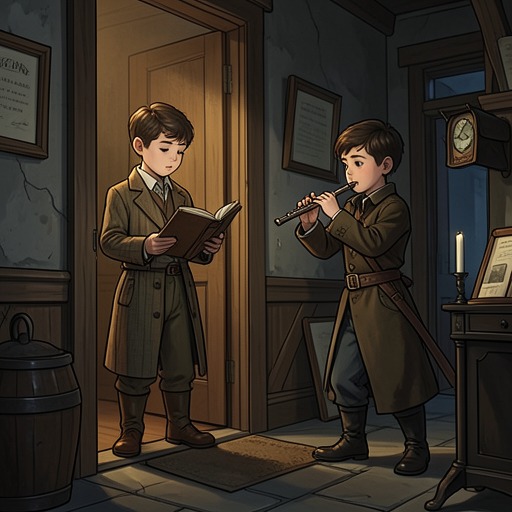
Harlequin is one of the Marionettes in Fire Eater’s theater. He appears onstage with Pulcinella in a familiar comic routine: the pair recite and threaten each other with sticks and blows while the audience laughs. Their performance is interrupted when Harlequin notices Pinocchio in the theater and stops speaking to point him out. The pause breaks the play’s rhythm; the other Marionettes recognize Pinocchio, and the staged quarrel gives way to an exuberant welcome.
Harlequin is therefore introduced both as a working performer and as a member of a community that recognizes kinship beyond the current act. The other Marionettes call Pinocchio their brother, and Harlequin himself invites him into the troupe’s embrace. Pinocchio leaps from the audience onto the stage, where the Marionettes lift him onto their shoulders. For a moment, the show belongs not to its scheduled comic routine but to the performers’ reunion with one of their own.
The Threat from Fire Eater
The celebration brings the director out of his room. His terrifying appearance and the whip twisted from green snakes and black cats’ tails make visible the force behind his control of the theater. The Marionettes tremble, and the performance has become a confrontation in which the director can impose the consequences of disobedience. Harlequin is caught in that shift from public entertainment to private danger.
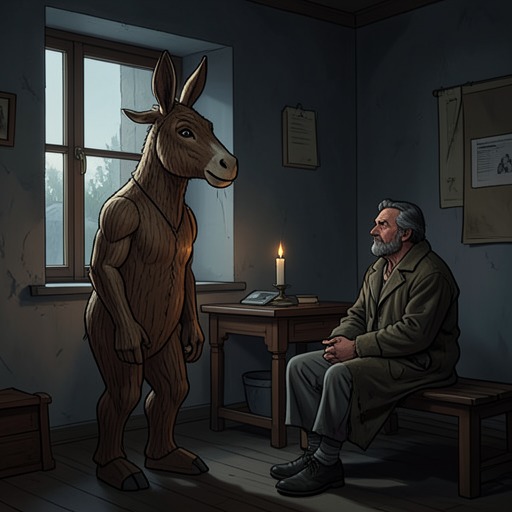
Fire Eater orders his wooden officers to tie Harlequin up and throw him on the fire, saying, “I want my lamb well done!” Harlequin is so frightened that his legs double under him and he falls to the floor. He is then brought to Fire Eater struggling with fear and crying that he does not want to die. His vulnerability contrasts sharply with the stick-wielding bravado of the stage routine: the theatrical threat of blows has become a real threat to his life.
A Sneeze, and a Change in Fortune
Fire Eater’s response complicates the menace of his command. Seeing Harlequin brought before him in terror, he feels pity, wavers, and finally gives a loud sneeze. The sneeze is a signal because Fire Eater has the peculiar habit of sneezing when unhappy; the narration presents it as an outward sign of the kindness hidden beneath his frightening appearance. Harlequin, who had been as sad as a weeping willow, turns toward Pinocchio and whispers, “Good news, brother mine! Fire Eater has sneezed and this is a sign that he feels sorry for you. You are saved!”
That hope is not yet a pardon. Fire Eater has spared Pinocchio, but insists that Harlequin must burn in his place because dinner still has to be cooked. Harlequin’s brief relief therefore sharpens the choice facing Pinocchio: pity has softened the director, but it has not removed the danger. The scene makes the sneeze an ambiguous reprieve, a small bodily sign of mercy set against the continuing authority of the order.
Pinocchio’s Offer and Harlequin’s Pardon
Pinocchio first pleads for Harlequin, describing him as someone who has never done the least harm. When Fire Eater refuses, Pinocchio stands and offers to be tied up and thrown onto the flames himself. He declares that it is not fair for Harlequin, “the best friend that I have in the world,” to die in his place. The exchange establishes the importance Harlequin has acquired for Pinocchio in this encounter: he is not merely another performer but a friend for whom Pinocchio is willing to face death.
Fire Eater grants the pardon. Harlequin asks whether it has truly been given, and Fire Eater answers, “Pardon is yours!” The director adds that he will have to eat his lamb only half cooked, then warns the Marionettes not to repeat the offense. Mercy thus comes with a comic reminder of the appetite that had made Harlequin’s life seem expendable. Pinocchio runs to Fire Eater and kisses the tip of his nose, while Harlequin survives the threatened execution.
Narrative Significance
Harlequin’s episode gives the theater scene a decisive reversal: an interruption that first provokes the director’s wrath becomes the occasion for Pinocchio to act on another’s behalf. Harlequin does not engineer his rescue; his fear and the director’s pity expose how precarious his position is. But his welcome of Pinocchio, his whispered reading of Fire Eater’s sneeze, and his appeal for confirmation of the pardon give him distinct actions within that reversal rather than leaving him as a passive object of danger.
After the pardon, the Marionettes return to the stage, turn on all the lights, and dance and sing until dawn. Their celebration follows the reprieve immediately, replacing the threatened burning with communal festivity. Harlequin’s survival is consequently both personal and collective: Pinocchio’s offer saves his fellow performer, and the restored troupe celebrates together. The episode makes the bond between the wooden performers visible through action, while placing Harlequin at the center of Pinocchio’s first clear choice to accept danger for a friend.